Saturday, May 5, 2012

RePurposing Kitchen throw aways


The Kitchen is perhaps the most prolific place of trash coming out of our home. Often people don't know what to do with all those empty cans, bags, twist ties, plastics and bottles other than to simply toss them into recycling bins.

However, this method depends on a great deal of carbon foot-printing.

Consider this:

* If you delivery to a Recycling Center: You use your vehicle to transport the recycled materials to the site. Then that material is hauled to a facility where it may be sorts, or may be put into a larger petrolium gobbling vehicle to be hauled to a cargo ship to be shipped to another country.

* Curb side recycling: Each bin must be picked up by a recycling center vehicle which is starting and stopping numerous times along the curb to pick up the neighborhood recycled materials. Then that material is hauled to a facility where it may be sorts, or may be put into a larger petrolium gobbling vehicle to be hauled to a cargo ship to be shipped to another country.

Why not try a third option? Why not REUSE it yourself? Yes, that is possible. Many items used for one purpose can be repurposed and reused on site. Saving greatly in the carbon footprint of our neighborhoods, towns and nation.

Such recycling doesn't have to be unsightly either. Here are just a few examples of how you can repurpose Kitchen waste within the confines of your own home or property.

---------------------------------

Do you ever try to figure out how to keep your things preserved from the sun, insects and rodents without having to buy expensive storage systems?

If you store foods in South Dakota, without using pesticides and other poisons to keep predators out. One frugal way to do this is to repurpose Popcorn tins.

You can get those large popcorn tins at rummage sales or thrift stores. Often they have whimsical winter themes or cute little bears or something on them. Not necessarily what you want on your shelves as canisters. But a 50 cent can of spray paint from the Habitat Restore can resolve that issue.

If you want you can also label the can so that you know what is stored inside. This tin system works great for bags of dried beans or even boxes of cake mix, etc that are otherwise easily penetrated by rodents. By placing bags of legumes in tins (still in their sealed bags) you also remove the sunlight which deteriorates the nutritional aspects of the legumes. Keeping them inside the bags makes it easy to have numerous different types of beans in the same large can.

Placing boxes such as cake mix into tins prevents those little moths that we have in South Dakota from being able to burrow into the cardboard and lay their eggs. These moths are small gray moths. They are known as "Pantry Moths".

Some say the moths eggs are actually already in the wheat, but I'm not sure about that. I do know that one of the safest ways to get rid of them is toss EVERYTHING that they could have gotten into. (I had them assault my pantry supply once already, so I learned). They are tiny and can get into the folds of boxes and into the boxes. So having tins prevents this from happening.

How does one know if they have pantry moths? Finding webbing in a stored food product is a sign that you have an infestation. So the tins that you and your family throw away can save you hundreds of dollars of damage. So can those old empty jars such as spaghetti sauce jars! It doesn't matter what type of lid it has, as long as it has a lid.

-------------------------------------

Commercial Meat Trays

Have you noticed how stores now sell their meat in plastic meat trays?

Simply wash the tray after removing the meat, instead of tossing the tray into your plastics bin.

These trays work wonderfully as plant watering trays. They are stout and their shape makes them ideal for placing side by side with other trays and not leaving unneccessary space on the shelves or unusable space due to the pots being rectangular nursery pots and the trays (found commercially) being round.

Here you see one of my meat trays that has been washed and is now being used under some nursery pots that I recycled. There is enough room in the tray that I could add one more pot.

The plastic of these trays is sturdier than many watering trays found commercially as well, which to me is a great bonus.

-------------------------------------

Large Plastic Jugs:

Large plastic jugs are a God-send in my opinion when it comes to frugal living! The cost of a simple scoop is outrageous and here is a scoop-to-be just sitting in our recycle bins!

The diagram below shows how to take a modify the jug so that it can become a great scoop for dog food or other feeds or other bulk items such as bulk flour storage or sugar storage bins.

Another use of large plastic jugs include repurposing them into watering containers.

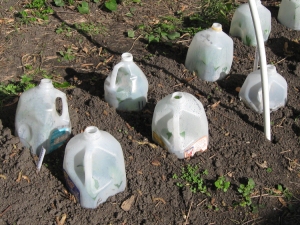
Many people have used semi-clear milk jugs as Cloches for their gardens. Some of the new milk jugs that are darker so as to reduce light deterioration to the milk, no longer work effectively as cloches, but there are still plenty of alternative plastic jugs out there to use as garden cloches.

Some people repurpose their larger jugs into dispensers of other items such as Bath Salts.

Another clever idea is to use them in Halloween decorations.


Some people use old milk jugs and other large plastic jugs as container planters.

The options are endless. But what is best is the plastic jug doesn't need to be shipped to some unknown location but can be utilized by your own family by simply repurposing.

-------------------------------------

The Tin Coffee Can:

Coffee cans come in plastic or metal these days. Both have their repurposing benefits! Both are GREAT canisters-to-be or can be used in creative ways unrelated to storage of food. Here I want to focus on the multi-purpose aspect of tin coffee cans.

As mentioned in a previous blog, I use one of my metal coffee cans as a container for my recycled egg shells.

But this isn't the only thing you can do with metal coffee cans.

You can repurpose coffee cans into decorative lanterns:

Or you can take it and make a funky ceiling lamp.

Another repurposing idea is to take the coffee cans and mount them to a board in a row and make a place to store craft supplies such as yarn, fabric scraps or even spray paint cans.

Some people take the humble coffee can and repaint it as part of their repurposing effort, then mount it to a wall or fence to become a decorative planter.

Another creative RePurposing of metal cans is to make Charcoal Lighting chimney's with them.

You can even make a coffee can oven so as to make Coffee Can Bread!

Some people use tin coffee cans as chimneys as they make adobe ovens.

Another cooking stove made from a coffee can is the "Coffee can wood-gasifier stove"

Another is the Tin Can Sterno Stove.

Coffee cans also make great emergency kits for the trunk of your car. Simply take the can, prepare it to become a Tin Can Stove. Drill the necessary holes, etc. But instead of using it for recreational situations. You take the empty can, add a small candle, some water proof matches or a lighter, a small tin cup or enamelware cup (to be used for mini cook pot). Pack these items into can. Add small envelopes of ketchup, mayonnaise, honey and seals packets of crackers.

These items are not "snacks" but emergency items. While not great as a meal, these items have protein, sugars and other nutrients that could be beneficial if you were stranded for some time. Having the stove & cup allows you to melt snow and make water available to yourself until help can arrive. In summer, you should always travel with water bottles in your car, so even in the warmer seasons you should have in your travel pack, emergency supply of water.

----------------------------------

Mylar Lined Resealable Bags

The Mylar bag has been getting a lot of attention lately within the Prepper community. This is mainly due to the mylar bags' ability to reflect light and thus protect stored items from degradation due to light.

While most preppers talk about buying mylar bags so as to store their food storage, few talk about recycling mylar that is currently coming into one's home.

You may not even realize that you have mylar bags around you in various forms. But they can be found in grocery food bags and in the form of pet food treat bags.

These recycled mylar bags work wonderfully for storing garden seeds, which was mentioned in a previous blog. Also they work great for storing food items. Even if you aren't placing the food directly in contact with the reused mylar bag, but keeping the item in its original box or bag, but merely placing that bag or box into the large mylar bag to lengthen its shelf life. Another type of "Mylar" lined item that often is tossed is the paper lined baby formula cans. These cans have a silver lining inside that works in the same manner as the mylar bags.

While the cardboard cans aren't rodent proof, they are tools to assist in reducing light penetration. I use old formula cans to hold small bottles of garden seeds.

------------------------------- Mesh Bags

These bags are often tossed by families after the produce in them is used up. However, mesh bags are a great item with many uses.

One of the simplest things you can do with mesh onion bags, for example is take and cut the label off and tie the bag into a knot in the center. Then repeat this again over the first knot until the ends of the bag are too short to tie again. This ball of mesh just became a scrubber for your kitchen!

Another option is to take a small mesh bag, after emptying it of its produce, and cut a small oval out of one side. Then take the bag (with bottom seam still intact) and hang on a hook or nail at the edge of your sink. This bag will then become a handy place to place your wet sponges. By giving them breathing space the sponges dry quicker and it reduces the chances of mildew building up in the sponge.

Another way to use the bags is to reuse them for various produce that you may want to store in your root cellar or cool pantry storage space.

There are numerous garden produce that needs air when in storage. Onions and potatoes are two of these items. Others include: beets, turnips, & garlic. Allowing air flow to produce is critical when storing and the humble mesh bag you've been throwing out can help you in that job.

Another use of the mesh bag is to provide you with a great place to store all those bath toys of your children!

Small soft material mesh bags can be used to collect thin soap bars that are getting too small to easily hold and use. Take these thin soap bars and toss them into the bag. Then use the bag as a scrubber that has its own soap supply, by simply tying off the open end.

These are just a few of the items you can repurpose.

Tuesday, April 17, 2012

Mother Trees and Spring Harvest


Many people think of harvest season as being one period in the calendar.


However, if you are thinking frugally, any time of year may be a time to harvest. Its just a matter of what you are harvesting!

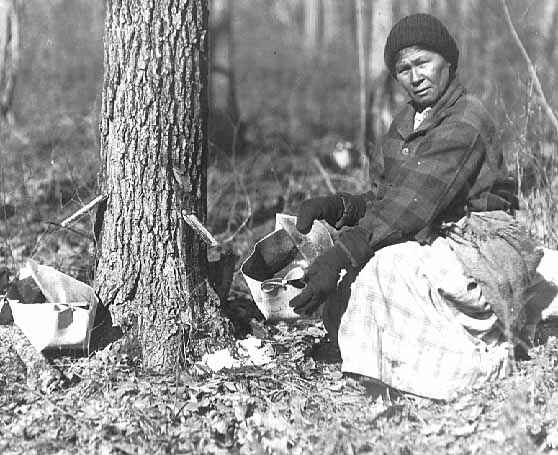
In February and March, depending on where you are, its time to harvest the tree sap, to make syrup.


Most people don't think of trees in South Dakota as something you "harvest" unless you mean cut them down and burn them for firewood.


But trees are far more productive than most of us give them credit for. One example is the previously mentioned syrup made from tree sap. But you also have fruits and nuts, as well as medicinal barks.


Most fruit & nuts however are provided to us by trees in the summer & fall.


Pomegranate Fruit


Cherry fruit


Apple fruit

Another productiveness is their self generational aspect. In my lots, I don't rake up leaves under the trees, but rather leave them to rest and compost under neath the "nurse-mother" trees.


By doing this I am allowing nature to create its own nursery bed for young seedlings to propagate.


Its not just the species of tree of the "nurse-mother" tree that is providing shade, but also other tree seedlings that will often germinate and begin to grow under the shelter of the "nurse-mother". The adult tree provides protection from harsh sun and wind. It also provides nutrients that otherwise the small seedling couldn't reach deep down in the soil to obtain. This nutrient is provided in the form of those decaying leaves.

With pine needles and leaves covering the floor of the undergrowth area, the seedlings have a suitable nursery to get started. Then in the spring I go through my "nurse-mother" nursery and select various seedlings I am wanting to pot or transplant to specific locations. This system of allowing nurse-mother trees rear seedlings for me, allows me to grow trees instead of BUY trees at the commercial nurseries.

This year I was able to harvest from the nursery Honeysuckle, Choke cherry, Lilacs, Box Elders, and Maple.

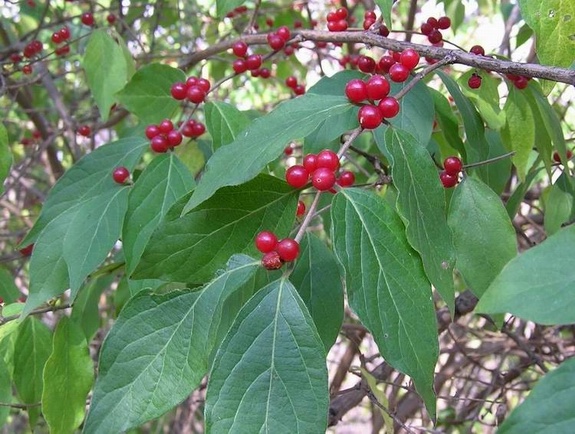
The honeysuckle is a favorite of bees in the spring and is a great for hedge style screening due to its fast growing qualities. Calling bees to your yard early is good since it helps establish your area as a place for worker bees to forage regularly, thus helps you in pollinating your garden and fruit trees. But remember, DO NOT spray insecticides if you want beneficial insects! Encourage a balance and you won't have issues with insects. (Note: Don't wear fragrances when you are going to be outside & you won't be harassed by bees and hornets!)


In the fall the late summer and early fall, it is covered with berries loved by birds.


Please note that it is said to be "slight poisonous to humans". So don't place the bush where small children would try eating the berries. Just the same, small children should be watched regardless of whether they are inside the house or out, when it comes to eating plants! (many indoor plants are extremely toxic!).


The Lilac, while popular as a hedge plant and as a accent plant in many yards in America, is another plant few thing of as having other qualities. Lilac is also medicinal and has been used historically in many ways. Its also a source for making lilac incense & essential oil. You could also use the blossom to make candied blossoms or in petal form in bathes as fresh petals or dried.


Each spring, when the lilac is blooming, I pull out my lilac blossom vase & bring the smell of lilac into the house as a form of fresh aroma therapy as nature made it!


Its blossoms are unbelievably pleasant and we take great joy sitting and having tea near our lilacs when they are in bloom. They also are great at producing a hedge and screening off unsightly areas. So having hedges with lilac are greatly appreciated in my yard.


Box Elder, another harvested seedling has the potential not only as a shelter belt tree or shade tree, but also as a medicinal and as a syrup producing source.


By moving the seedlings to desired locations, we also control unwanted planted locations such as along building foundations, etc. Seedling trees can be a resource, not only as fruit or nut trees or as medicinals, but also as shelter belt protection of farm buildings & livestock areas from winter winds. Buying hundreds of trees from a nursery can be costly, but with a little planning, I am able to harvest over 100 trees each spring & relocate them to desired locations on my land or offer them to others.

If I wanted I could even take the seedlings and either grow them in containers for a couple of years and then sell them at higher prices to others; or I could simply sell them as seedlings to others seeking those varieties of trees.

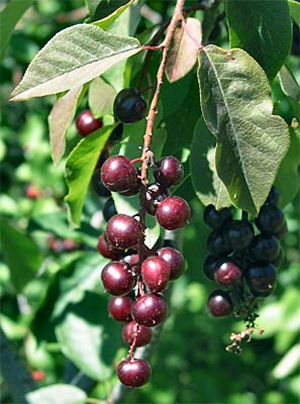
The final seedling harvested this year was numerous chokecherry seedlings (also called bitter-berry, or Virginia bird cherry).


The fruit of chokecherry is used in making jam, jelly, or syrup as well as making wines by some.
=================================================================================

Seedling trees aren't the only harvest I am able to have in the early spring.
Moss & Lichen are at their prime right now & harvesting them for medicinal & decorative purposes should take place this time of year.


In my own project, I am wanting old knarled bark & moss to make the roof of a toad house, which is being made out of a reclaimed plastic coffee can & a group of pebbles I have collected. The lichen covered bark & the moss with be used to accent the bark roof to finish the garden toad house.

Another harvest that takes place at this time of year is the harvest of willow branches & sucker branches that are starting to form on various bushes. By harvesting the willow branches, I am able to use those branches for three different purposes: (1) to make medicinal bundles of willow for equestrian animals, which helps in preventing cribbing.


This is an old trick taught to me by a very old horseman, when I was a teenager in eastern Colorado. Mr Turner was his name. He was in his 80s when I knew him. He told us that the way to stop horses from cribbing is GIVE THEM willow by the pickup load! He said horses crib when they need something out of the wood. "They aren't bored, like some people think!" he's say. "They are needing something and that something is in the willow!". Well now that we recognize the medicinal aspect of willow bark for humans, we are a bit more understanding that perhaps the horses had something going! They were imprisoned in a cell (ie corral) and they are needing asprin for pain and aches. Now we humans will reach for the medicine cabinet, but the horses simply reach for the bark of preferred trees. If they have the freedom of finding willow, they choose it. But a corraled animal doesn't have many opinions and so they will crib every bit of wood they can get their teeth into.

If you provide a cribbing horse a pickup full of thin willow, Mr Turner told us, the horse will quit cribbing for some time. When it starts again, you know its needing it again. That simple.

Well, I've got a friend with an "older, mature" donkey and a "mature, older" miniature horse. SO I agreed to harvest some willow and see if this will help their aches and pains. Having sympathy for aches and pains myself, I can't deny another living thing may just wish they could reach for their pain meds too!

So in this case, we're going to provide a bouquet of twigs, freshly cut from my willow trees.


Another aspect of the willow is that its a natural rooting agent. Instead of buying the commercial rooting compound, I decided to try cuttings of willow put into my water rooting jars, along with the cuttings I want to root. I read about this technique and wanted to see if it would work. Well its worked great!


I placed the willow into water alongside some cuttings of apples, that I wanted to try to root. My goal is to start the young apple trees and then later graft them to some hardy crab apple root stock.

As willow will do, when you put it in water, it shoots out roots. But not only does it put roots onto its cuttings, it releases the same rooting hormone into the water, that it has more of than most woody plants. This water is then usable for rooting SOME cuttings that otherwise would not root without rooting hormone. In the case of my experiment, it was cuttings from several apple trees.


This is of course, only one step of the process. I am still needing to see if the rooted cuttings of apple will grow successfully. Since these are likely from trees that had been grafted to cold tolerant root stock, I will be potting my cuttings into reclaimed nursery pots so that I can move them appropriately to warming beds and even inside, if needed, in the cold of winter.

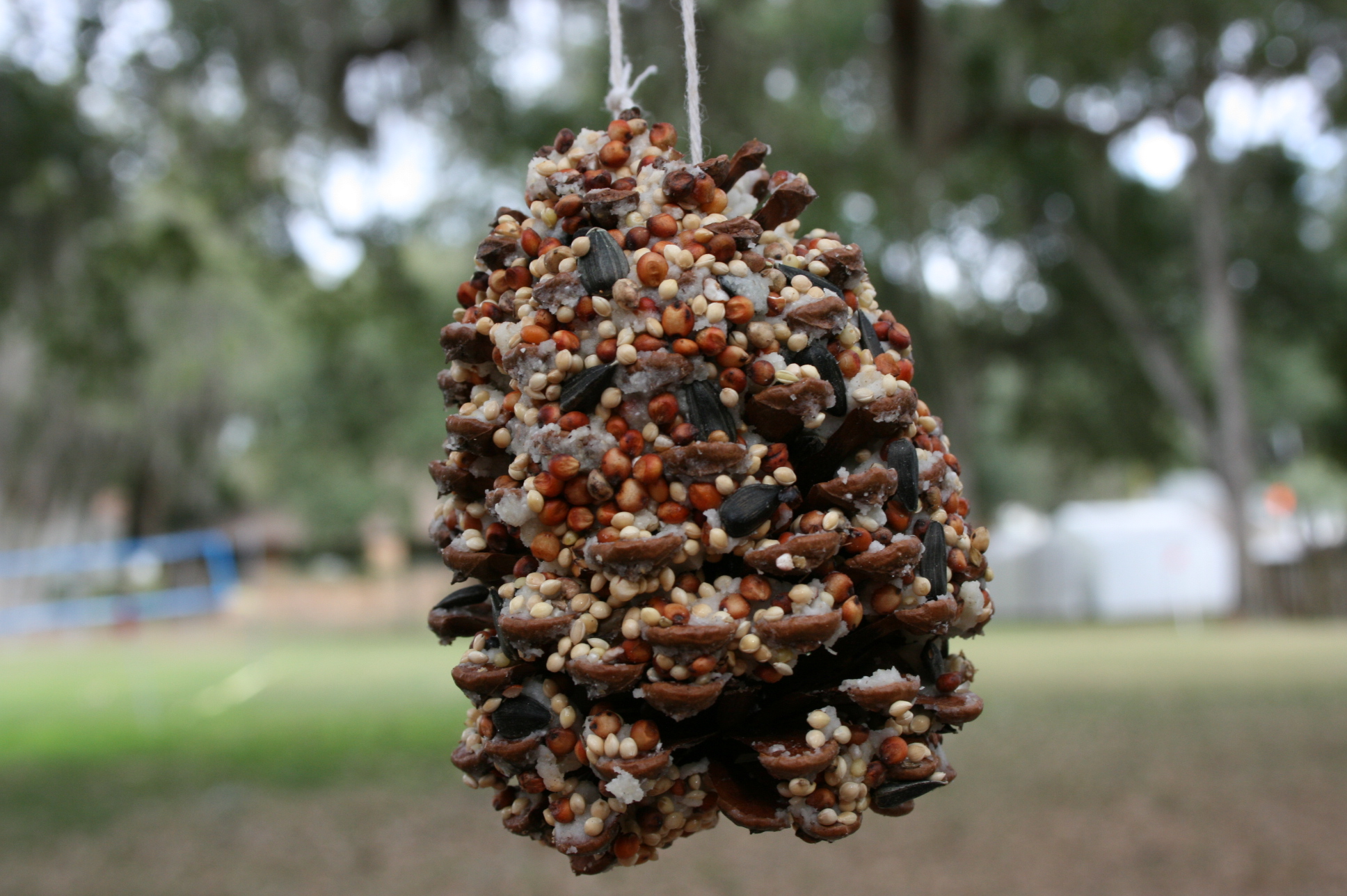
Another spring harvest, you may not think of from trees is that of the discarded pine cones that fall from your trees (or your neighbors) that become a nuisance to lawn mowers. Instead of seeing them as nuisances, consider them as potential bird feeders,


Or as chew toys for parrots and cockatiels. This helps with the boredom experienced by the caged birds. But Caged birds aren't the only ones that can benefit.

They'd also make great edible toys for chickens in the winter when boredom can cause some poultry to peck at each other. By giving them suspended pine cones dangling from the ceiling, you give them something new to explore. You can add to it peanut butter/seed mix, if you want.


But beyond feeders for birds, pinecones make great material for crafts of a great diversity. Perhaps one of my favorite things to do is use pine cones as a decoration. Here are just a few examples. (Note: If you click on the photo, it will direct you to the page that describes the craft).


Thursday, April 12, 2012

Blog Sponsored Sustainability Fair

Well, I'm jumping in with both feet it seems!

I've agreed to host a Sustainability Fair this year during "International Homesteading Education Month" which is September.


So on September 8th, Bushnell will be the host community of a Stocking Up - Sustainability Fair!

We now are registered with Mother Earth News'listing of Events around the country.

And also we have a webpage on Facebook promoting the event, which we will keep updating.
With time I hope to list the speakers and programs here & on facebook. But sustainability, here I Come!

Its my goal to recruit, hopefully, presenters on home canning, preservation of meat, home slaughtering as well as home meat production & meat locker slaughtering. So many people are unaware of the resource of "Meat Lockers" as a place to have your meat slaughtered for your family. I've contacted Big Daddy's Meats & Elkton Lockers to see if they'd consider being a vendor/presenter.

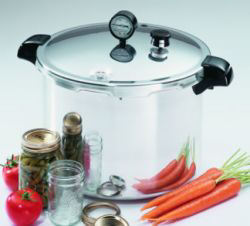
I've also spoken with a representative of Runnings Fleet & Farms to see if they too would be willing to be a vendor/presenter. They have some of the best supplies for home meat preservation, be it sausages or jerky or smoking your own meats! They also have canning supplies including pressure cookers such as the quality Presto Pressure Cooker


and replacement seals for cookers, which are often hard to find!

They also have FoodSaver products for those who like to vacuum seal their foods.


I hope to also incorporate workshops on smoking meats & cheeses, and also jerky making & hopefully using solar dehydrators as well as electric dehydrators for food preservation. This of course is my "Wish list" at this time.

With time we shall see!

Tuesday, April 3, 2012

Vertical Gardening


I've been reading about vertical gardening and have experimented with it at small scales. There is the typical trellis system that gardeners have used for eons to control their vining plants; and then there are the pot brackets hung on walls, window sills and fences.


But there are more non-conventional vertical gardens to consider. One can take reclaimed lumber and other materials to make beautiful arrangements of landscape to fill a space,


Or consider extending their garden up a wall by growing vertical gardens of vegetables. Salad greens work very well in vertical garden spaces.


I have numerous walls on the Gallery House which may work beautifully for different types of vertical gardens.

This year I have begun building small vertical gardens, using old reclaimed shutters. The first one I created, was a small one, using an aluminum shutter. It had no openings and was merely a decorative house shutter, so I had to drill holes. I used reclaimed 1"x6" boards to make the box.


Once I built the box, I lined the wood box using a construction trash bag. I chose a construction grade trash bad due to its toughness and thicker ply and availability. Then I secured a water trough at the bottom. My trough was an old feed trough about 6 inches long. The plastic is draped into the trough, so that water draining along the back area of the vertical garden box would move down into the trough, rather than spill out of the garden box. This is in hopes of conserving water loss.


The box was then filled with peat moss, as a soilless medium. I chose peat since it is supposed to hold water better.


I then took and nailed a piece of long narrow hardware cloth along the surface of the peat to reduce loss of the peat moss via the holes. This also should help keep the root systems in place as the plants grow.


Then I secured the shutter into place over the hardware cloth wire. I then sewed seeds into each hole, after showering the peat moss with water.


In a few days we should begin to see small plants emerging from the holes created.


A few concerns I have is whether or not the holes were drilled large enough to satisfy the needs of the plant stems. In the next version, I think I will see about ways to make the holes larger.